
Platform Transformation
Executive Summary
I led the transformation of a fragmented collection of legacy digital products into a unified enterprise platform that now drives the majority of the organization’s digital engagement and revenue. What began as a technical modernization effort evolved into a fundamental shift in how the company designs, builds, and operates products—moving from page-level optimization to a system-driven model centered on user intent and core content.
The result was sustained growth across users, memberships, subscriptions, and engagement, supported by a durable platform designed to scale through structure, automation, and continuous iteration.
Role: Director of Product Management
Team: 8
Role & Scope
I owned the product strategy, roadmap, and execution for the organization’s primary digital platform, overseeing more than 20 interconnected products. I built and led a cross-functional product organization consisting of product managers, project managers, taxonomists, SEO strategists, and UX designers and architects.
This team operated in close partnership with a mirrored technology organization led by a Director of Technology, including developers, technical architects, quality assurance, and technical project management. Together, we functioned as a single product and engineering organization with shared goals, operating cadence, and accountability.
The Problem
The digital ecosystem was composed of multiple legacy products built on outdated technologies and inconsistent patterns. Years of incremental decisions had resulted in fragmented architecture, duplicated effort, and entrenched habits that made meaningful change difficult.
This was not simply a technical challenge. The organization lacked a shared product operating model. Teams optimized locally, navigation and content structures reflected internal silos, and success was often measured by launches rather than outcomes. The platform became increasingly difficult to evolve, difficult to scale, and misaligned with user needs.

The Strategic Shift
Rather than optimizing the platform from the top down, we deliberately reversed the model.
Instead of over-investing in the homepage and high-level navigation, we focused the majority of effort on core content pages—the articles, products, and resources where user intent is highest and business value is realized. These pages represented the vast majority of the platform and were responsible for nearly all organic traffic, engagement, and conversion.
By designing from the core outward, we moved the organization away from manual curation and one-off decisions toward systems built on structure, taxonomy, automation, and repeatable patterns. This shift became the foundation for every subsequent design, product, and platform decision.
System Design Approach
Key Decisions & Tradeoffs:
We designed from the core outward. Instead of optimizing the homepage first, we prioritized core content templates and intent-driven pathways because that’s where users spend time and where outcomes are realized.
We chose automation over manual curation. Relevance and freshness had to be system driven; otherwise pages would become stale and trust would erode.
We standardized structure even when teams preferred autonomy. Taxonomy governance, templates, and shared patterns created speed and consistency across products at the cost of some local flexibility.
We kept navigation shallow and search persistent. Users should never have to “learn” the platform to succeed—architecture should reduce effort, not add it.
Operating Model:
To make this work across many products and stakeholders, we treated delivery as a repeatable operating system, not a series of launches. We aligned executive stakeholders around clear goals and success metrics, then ran a consistent product cadence that made priorities visible and decisions explicit.
In practice, that meant:
A shared roadmap and intake process to control scope and reduce ad-hoc work
Sprint planning and delivery in partnership with technology leadership
Regular stakeholder touchpoints to build alignment and prevent last minute changes
Instrumentation and funnel monitoring so design and content decisions were guided by evidence, not preference
Continuous iteration post-release, with improvements treated as part of the product lifecycle - not follow-on “nice-to-haves”
Core Content Pages
“Core content pages are where product decisions are proven.”
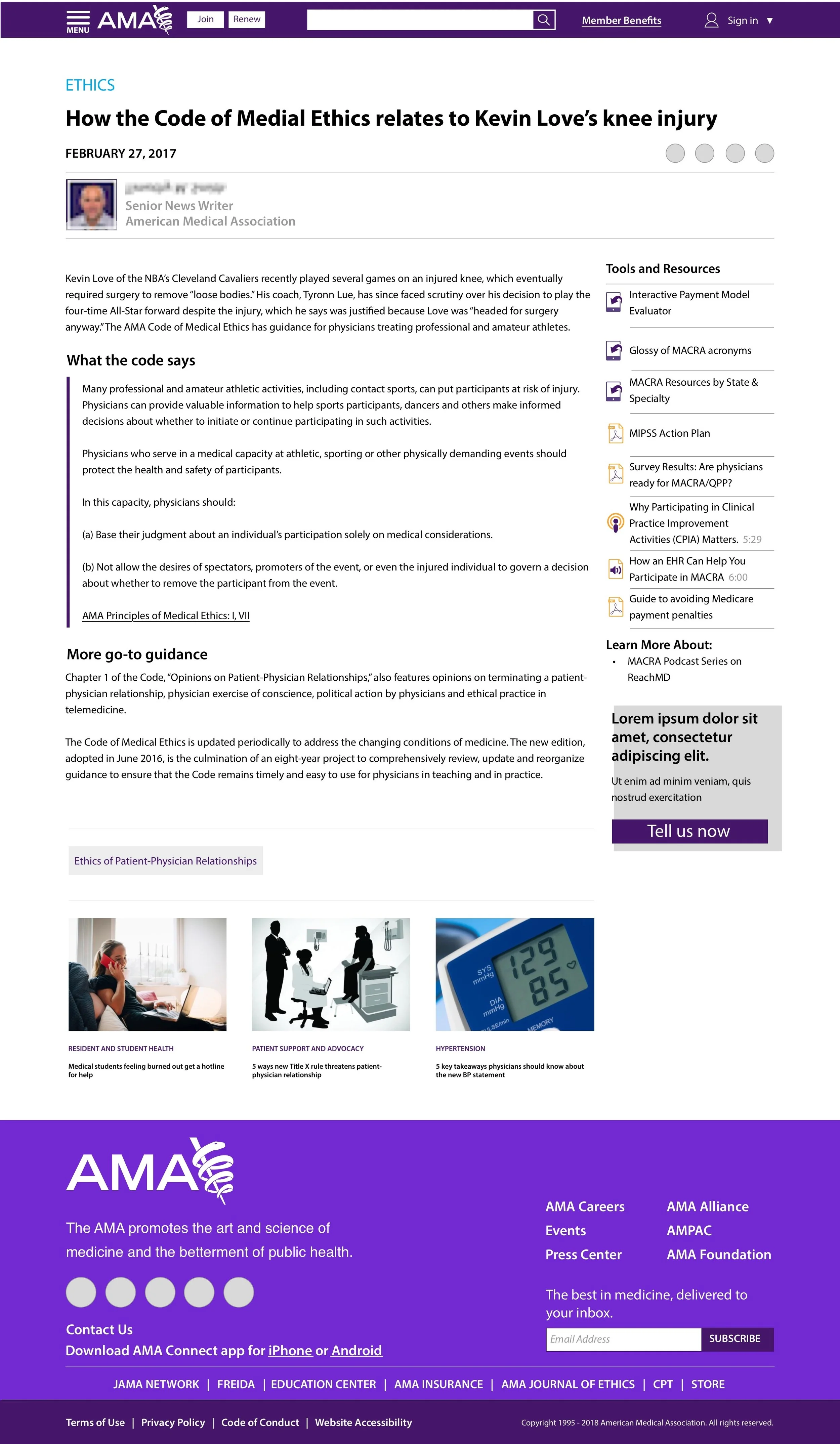
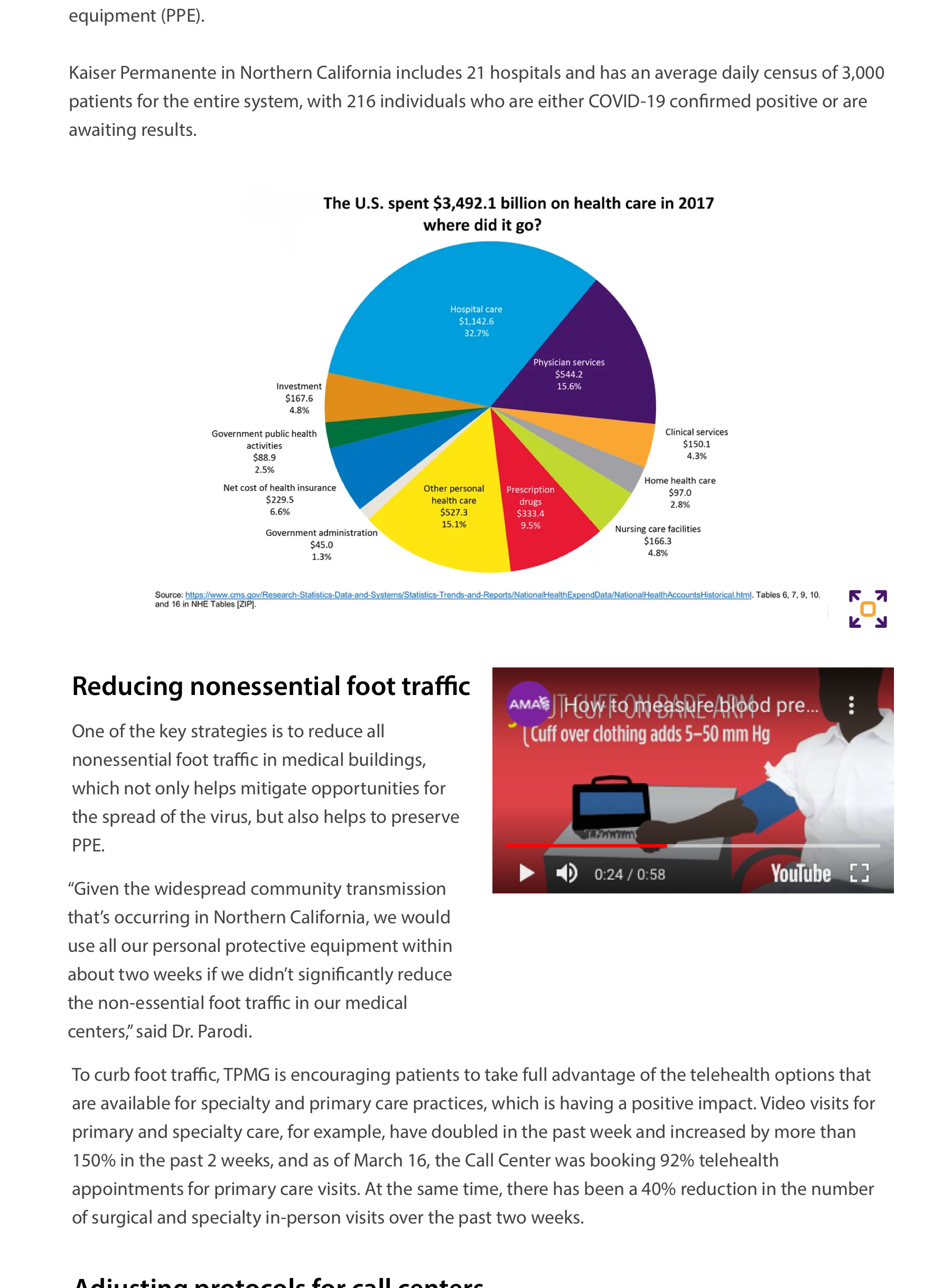
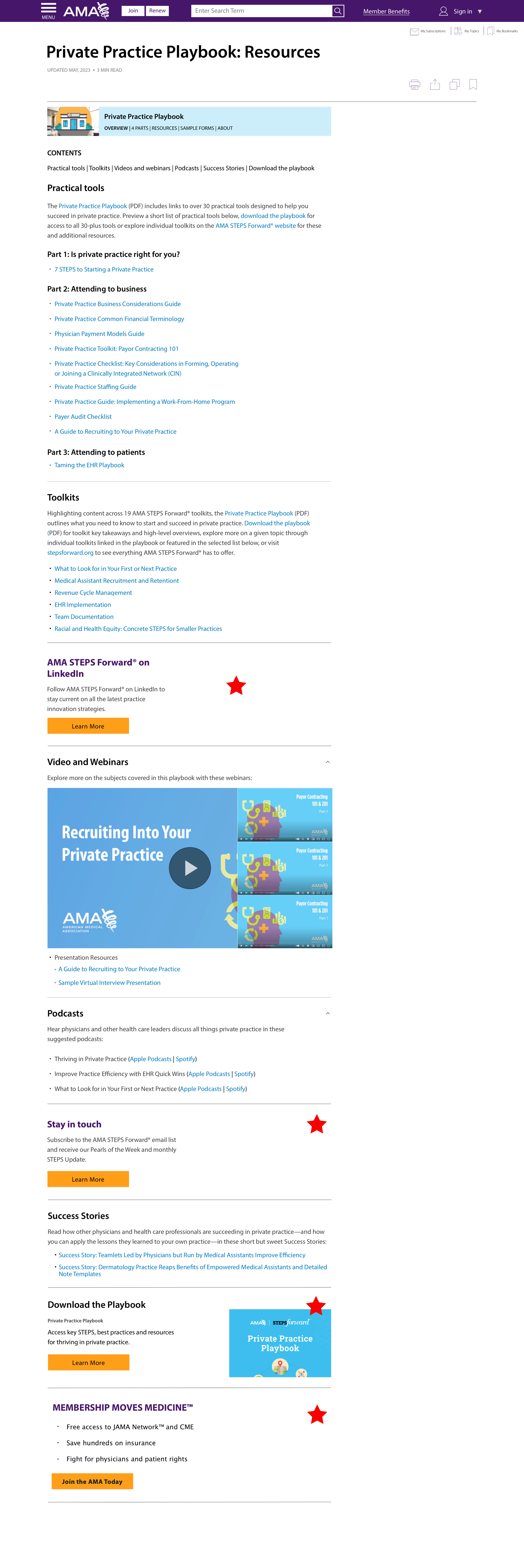
Core content pages became the center of gravity for the platform. Whether an article, product, SKU, video, or audio asset, these pages were treated as the primary unit of value. Design and optimization efforts prioritized clarity, trust, and usability, ensuring users could quickly understand what they were engaging with and why it mattered.
Business outcomes were supported through low-friction, contextually appropriate pathways that guided users forward without compromising the experience. Incremental improvements at this level compounded across the entire ecosystem.
Index Pages
“Taxonomy and automation allow relevance to scale without manual effort.”
With a strong taxonomic foundation in place, index pages became one of the highest-leverage tools in the system. These pages automatically surfaced highly relevant, micro-topic experiences without manual curation, enabling scale through structure rather than editorial effort.
Thousands of taxonomy-driven index pages were deployed, responding dynamically to user intent while supporting discovery, engagement, and conversion. As SEO and AI-driven discovery evolved, this page type continued to deliver compounding value.
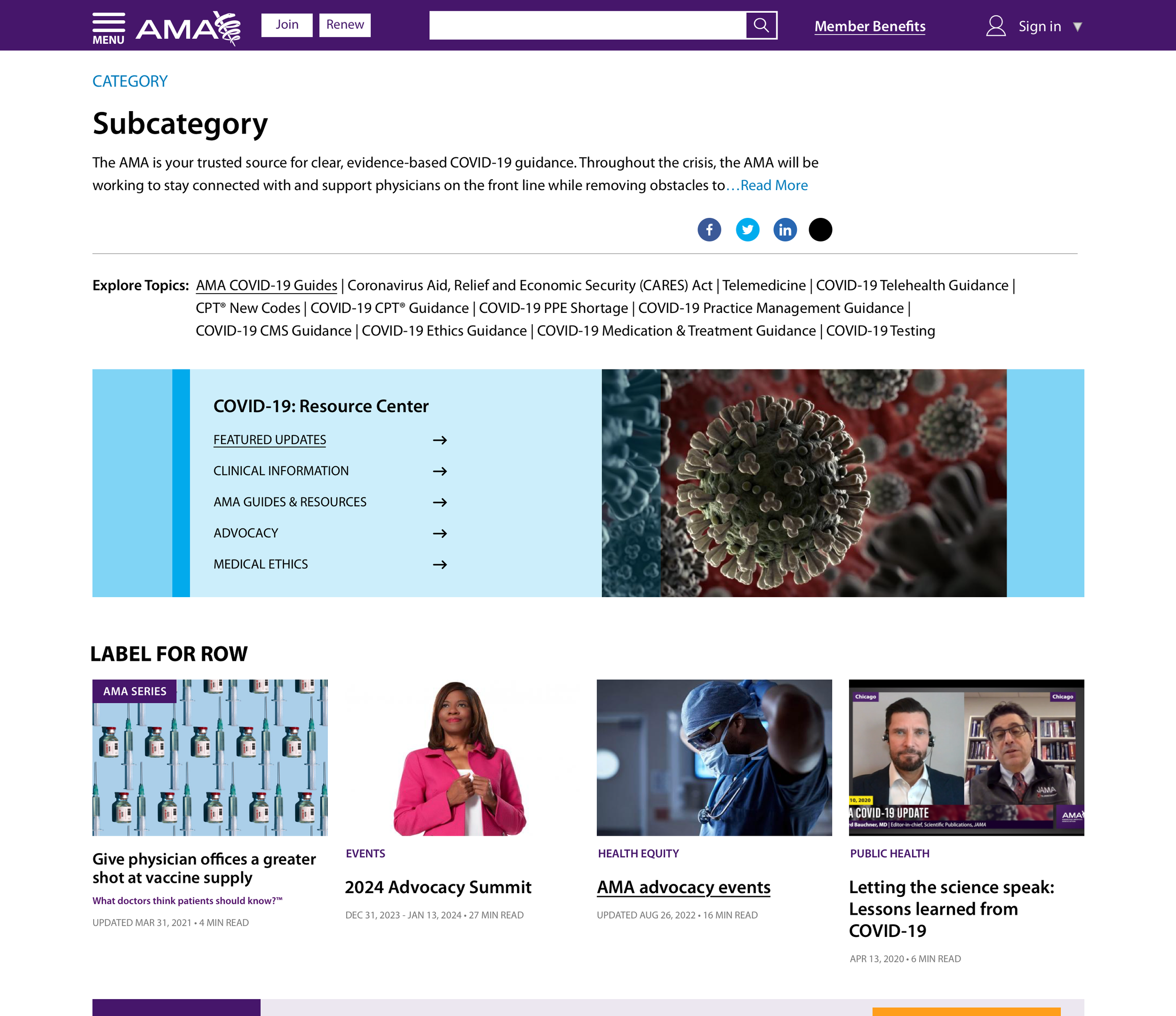
Subcategory Pages
Subcategory pages were designed as decision-making environments. While top-level navigation provided orientation, subcategories were where intent became clear and outcomes were achieved.
These pages supported multiple user modes: fast navigation for users who knew what they wanted, and deeper exploration for users who needed context before converting. Faceted navigation and prioritized content reduced friction while respecting different decision styles.
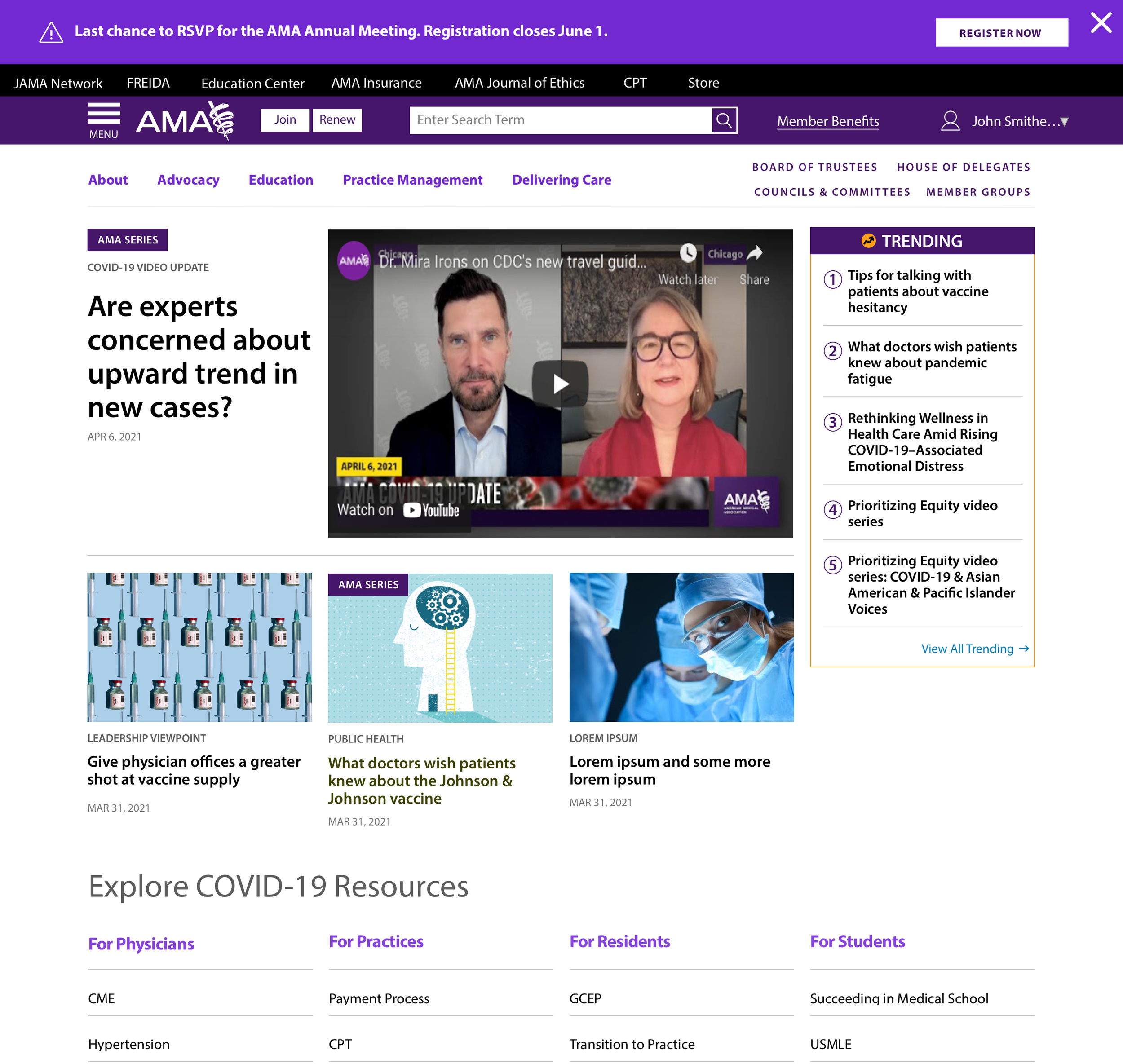
Category Pages
“Category pages are designed to move users, not slow them down.”
Category pages served as efficient transition points in the journey. Their role was to orient users quickly and guide them toward more specific destinations aligned with their intent.
Automation played a critical role here. Rather than relying on static or manually curated content, category pages surfaced “top” and “popular” content based on measurable signals. This ensured relevance, freshness, and trust while still allowing room for timely business initiatives and promotions.
“Good subcategories don’t just organize content — they help users decide.”

Homepage
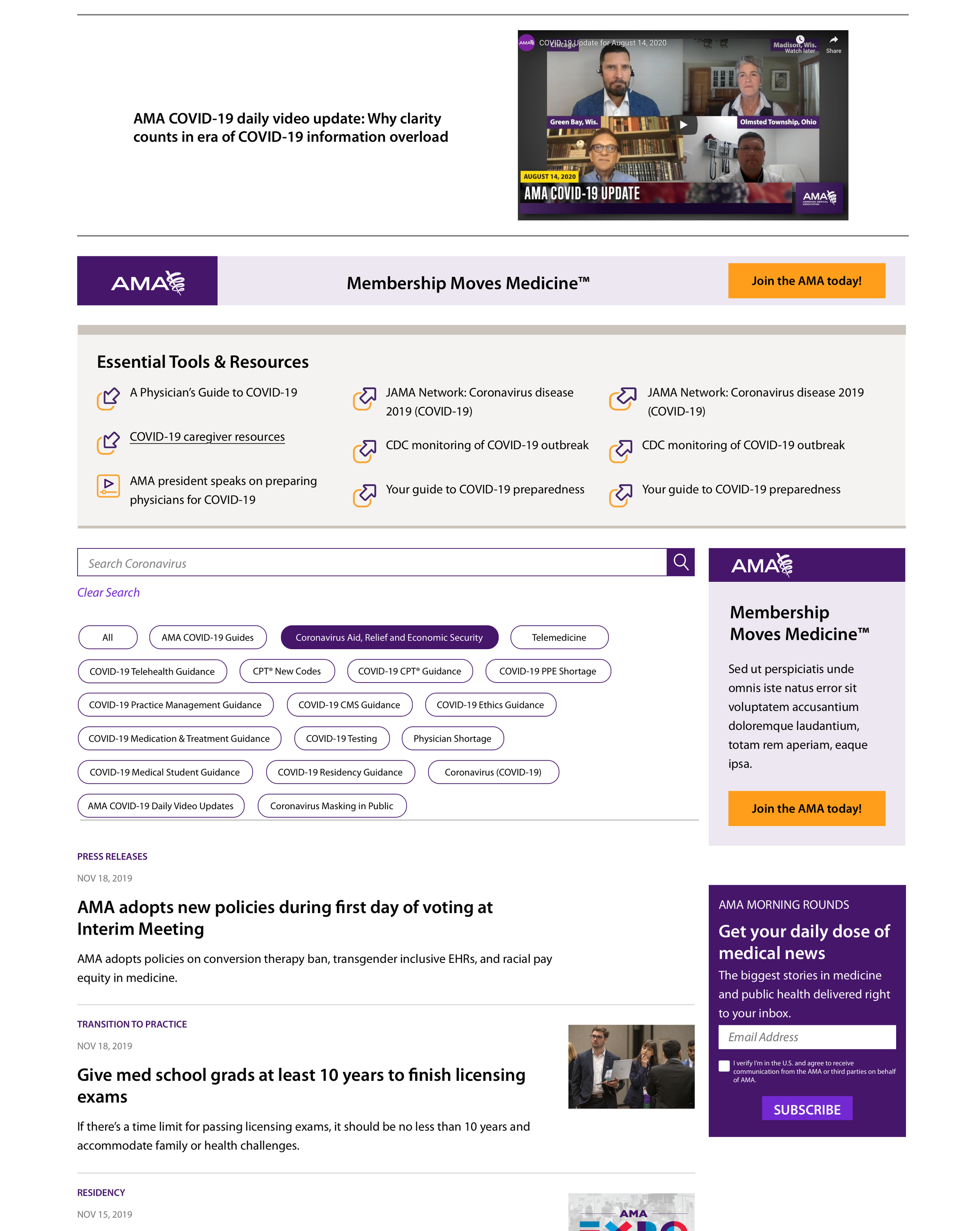
The homepage balanced two responsibilities: representing the organization’s identity and acting as a high-velocity transition point.
Transactional users were given immediate access to high-frequency actions such as sign-in, account management, and core tools. Exploratory users were presented with curated, automated content aligned to both user interests and business priorities.
To maintain trust, homepage content was fully automated and continuously refreshed. Even short periods of staleness were treated as a product failure rather than a content issue.
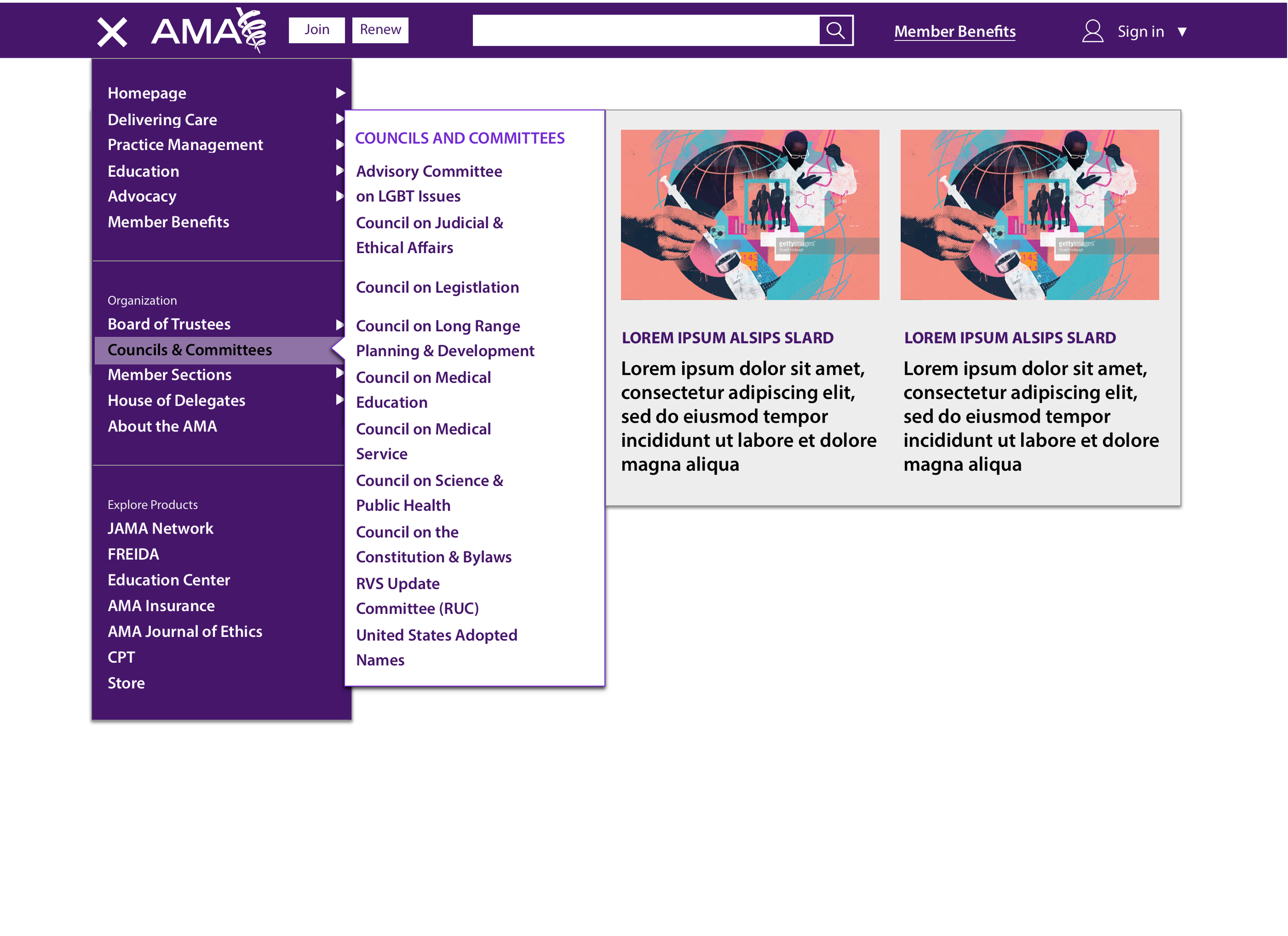
Navigation & Architecture
“When architecture works, search becomes a choice—not a requirement.”
Navigation and architecture were designed from the user’s perspective rather than internal structures. Hierarchical taxonomy supported primary navigation, while faceted taxonomy powered discovery and related content.
Navigation depth was intentionally shallow and typically no more than three levels. supporting usability, SEO, and AI-driven discovery. Search was treated as a first-class navigation tool and made persistently available, recognizing that for many users it is the preferred path.
“The homepage sets the tone and gets out of the way.”
Navigation & Architecture
Navigation and architecture were designed from the user’s perspective rather than internal structures. Hierarchical taxonomy supported primary navigation, while faceted taxonomy powered discovery and related content.
Navigation depth was intentionally shallow and typically no more than three levels. supporting usability, SEO, and AI-driven discovery. Search was treated as a first-class navigation tool and made persistently available, recognizing that for many users it is the preferred path.
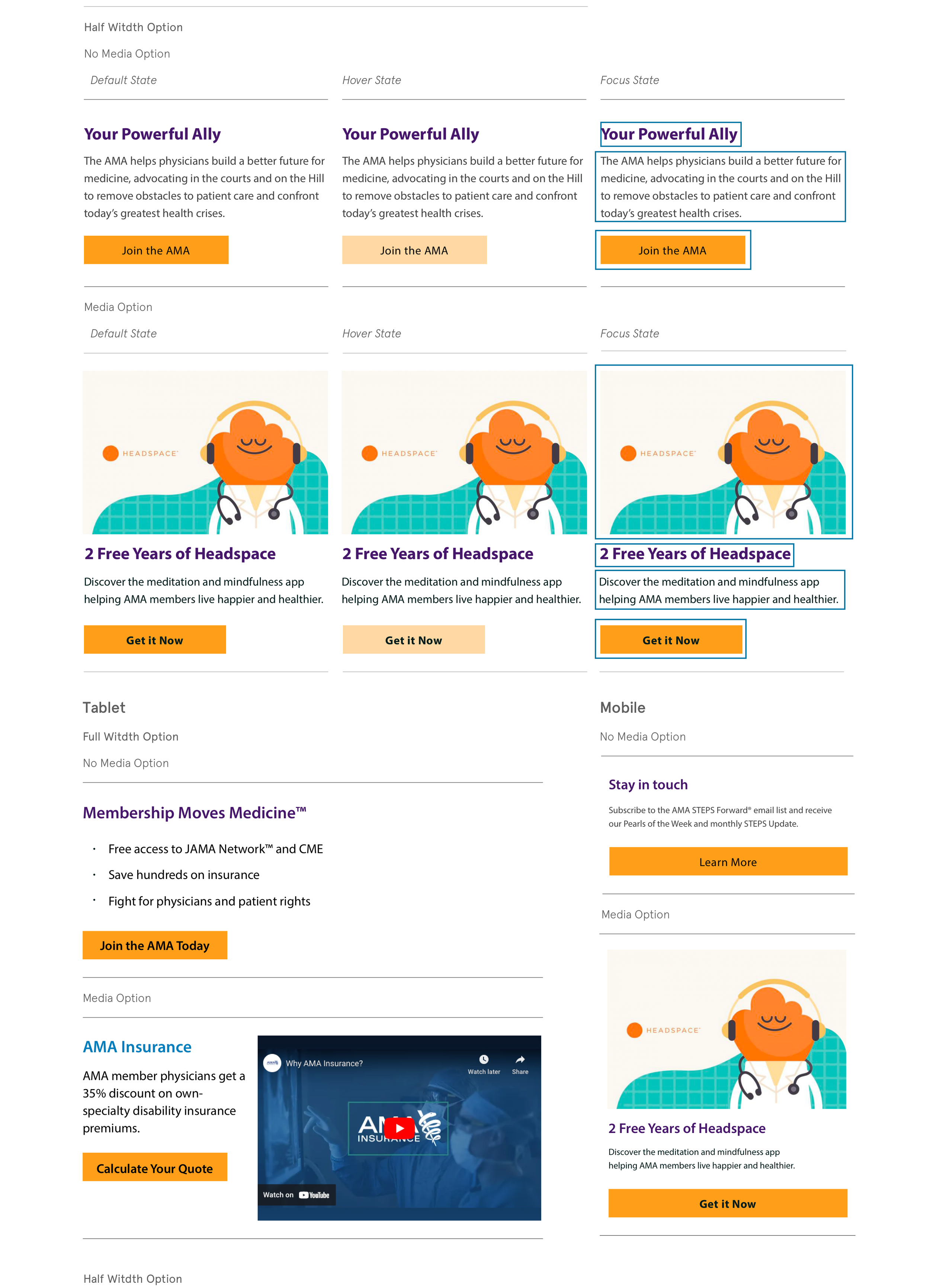
Design System
“A design system is valuable when it scales with the product.”
The design system was treated as a product, not a style guide. Built on component-based principles, it accelerated design and development, enforced consistency, and improved performance, accessibility, SEO, and scalability.
The system evolved through real product usage. As new products scaled, they exposed gaps and edge cases that fed back into the system, creating a continuous loop between platform and product.
“When architecture works, search becomes a choice—not a requirement.”
Outcomes
The transformation produced sustained, measurable impact across the organization’s digital ecosystem:
33 million annual users (2023), up from 3.5 million
328K members (2023), up from 245K
613,120 subscriptions (2023), up from 338,710
685,174 push subscribers, up from 1,800
18 taxonomies, 500+ topic terms, and 600+ indexes supporting discovery and scale
Beyond metrics, the operating model we established became the standard for how technology work was planned, delivered, and improved across the organization.
Business Impact
This platform shift reduced long-term operational cost by replacing manual curation and one-off builds with repeatable templates, automation, and shared governance. It also reduced delivery risk by creating consistency across products and making performance measurable at the page-type level. Most importantly, it aligned product, UX, SEO, and engineering around a shared system—allowing growth to come from iteration and optimization rather than repeated reinvention.
What Scaled
The platform continues to evolve. New and legacy products are integrated into the ecosystem, while experimental products are developed, tested, and incorporated when successful. Because the system is built on structure, automation, and clear principles, growth no longer requires reinvention—only deliberate iteration.
Closing Reflection
This work reinforced a core belief: good products emerge from the same constraints, regardless of industry or medium. User needs, requirements, dependencies, time, budget, and quality are universal. When systems are designed around those fundamentals, scale becomes a natural outcome rather than a constant struggle.